
Still Have Dry Eyes After Years of Drops? Here Is What Doctors Are Finding Hiding in 6 Out of 10 Cases
An 18-Year Eye Care Specialist Reveals the Hidden Cause That Eye Drops Were Never Designed to Reach
By Dr. Jennifer Walsh, OD
October 7, 2026
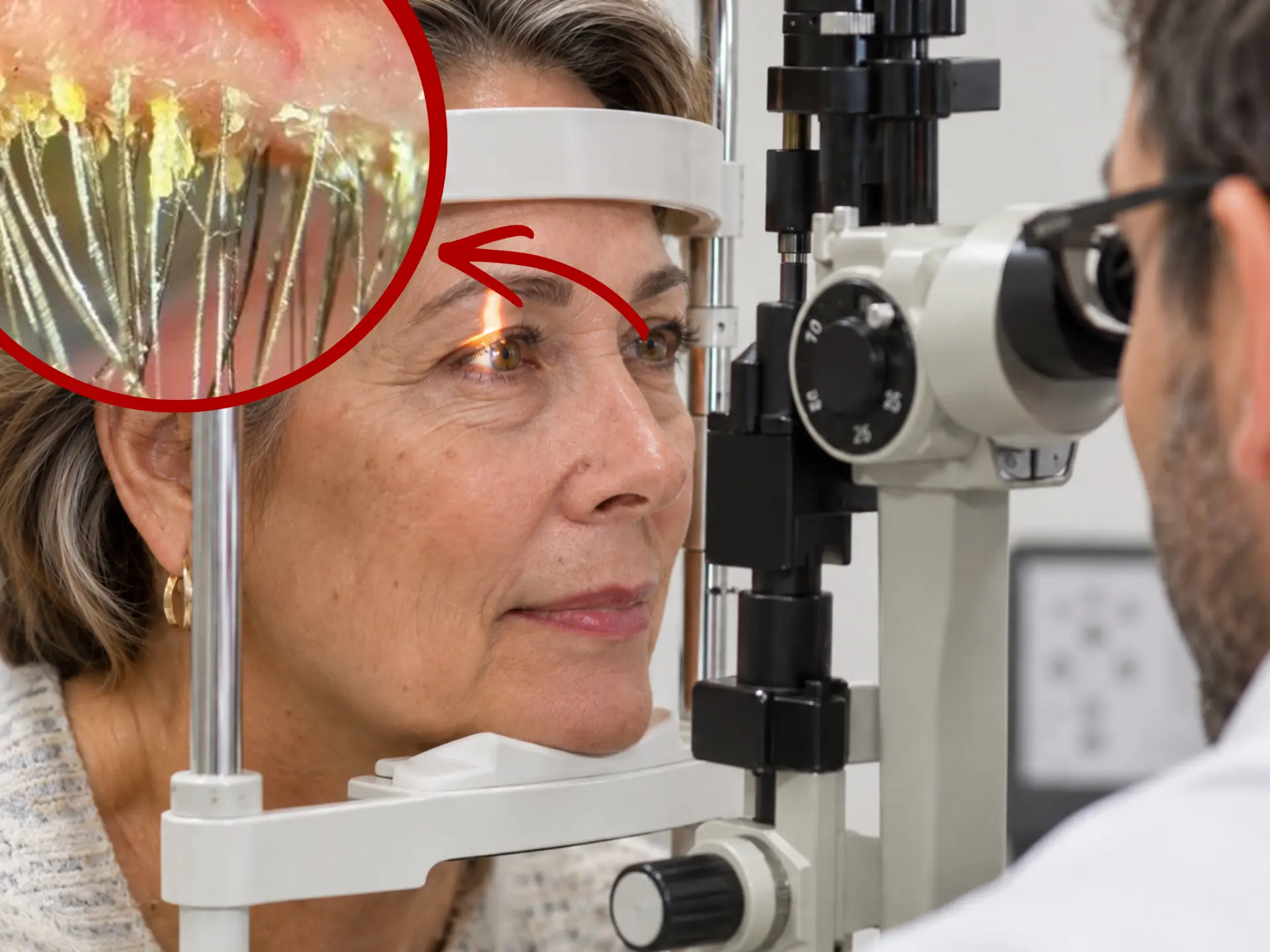
She had been using eye drops twice a day for over two years. She was my patient, 51 years old, doing everything her eye doctor told her — the drops, the warm compresses, the gentle lid scrubs. She was doing it all correctly. And it was not working.
Eight months later, she was back in my chair. Same crusty lids. Same burning. Same gritty sensation like there was always something in her eye. If anything, slightly worse.
- If you have been using eye drops for months or years and your symptoms keep coming back...
- If the warm compresses help for a day or two and then the itch and crusting returns...
- If your eye doctor keeps telling you this is just "chronic dry eye" and to keep using the drops...
- If you have quietly given up contacts or eye makeup because nothing the doctors prescribed has actually fixed it...
Doctors are now finding something hiding at the root of eyelashes in 6 out of every 10 cases just like yours. And it is something that eye drops were never designed to reach.
Eye Doctors Found It in 6 Out of 10 "Dry Eye" Cases. Most Patients Were Never Told.
According to peer-reviewed clinical research, nearly 25 million Americans currently suffer from Demodex blepharitis — chronic eyelid inflammation driven by a microscopic mite infestation that most eye care providers are not specifically trained to identify at the follicle level. It is present in more than 6 out of 10 blepharitis cases. And it cannot be treated with eye drops.
58% of patients with confirmed Demodex have been seeing eye doctors for years without ever receiving the correct diagnosis. The average patient suffers for 4.3 years — visiting an eye care provider 3.9 times per year, using drops, doing warm compresses, following every instruction correctly — with no lasting improvement. Because the drops were treating the symptom. Something else entirely was causing it.
I know this, because for years I was one of the doctors prescribing those drops.
My Most Puzzling Patient Failure Changed 18 Years of Clinical Thinking
My name is Dr. Jennifer Walsh, OD. I have 18 years of clinical practice specializing in ocular surface disease and dry eye management. I have treated more than 12,000 patients. I have completed advanced training in meibomian gland evaluation, tear film dysfunction, and slit-lamp biomicroscopy. I have lectured at continuing education conferences on chronic blepharitis management.
I believed I was giving patients the best standard of care available.
Susan was 53 when she first came to see me. Three years of chronic eyelid inflammation. Prior doctors had given her the same warm compress and baby shampoo recommendation that is literally chapter one of blepharitis management guidelines. She came to me because she had read about advanced dry eye care. Because she believed someone would finally help her.
I evaluated her thoroughly. Meibomian gland imaging. Tear film assessment. Full slit-lamp biomicroscopy. I prescribed a more sophisticated protocol — a heated compress mask, prescription anti-inflammatory drops, medicated lid wipes. Everything I had in my clinical toolkit.
She improved for six weeks. I felt confident.
Then everything returned. Exactly as before.
I had given her my clinical best. It wasn't enough. That evening I stayed with her chart and asked myself the question I had been avoiding: What am I missing?
The Research That Shocked a Veteran Clinician — Not Because It Was New, But Because It Had Been There All Along
I went into the literature. What I found in the peer-reviewed research shocked me — not because it was newly discovered, but because it had been sitting there for two decades and no one had meaningfully integrated it into the standard of care.
A 2022 study in Clinical Ophthalmology found that Demodex mites are the underlying cause in more than two-thirds of all blepharitis cases. A 2024 patient burden study confirmed that 80% of patients with confirmed Demodex blepharitis reported the condition negatively affecting their daily life — including difficulty driving at night, additional hygiene time, contact lens intolerance, and for 34% of women, the inability to wear eye makeup at all.
And here was the finding that stopped me cold: in the same 2022 psychosocial impact study, 47% of Demodex blepharitis patients reported being conscious of their eyes all day, and 23% said they were constantly worrying about their eyes. Not occasionally uncomfortable. Chronically, daily, consuming.
But this is not a story about chronic discomfort. It is not a story about inflammation. This is a story about parasites. And about why the entire standard of care has been treating the wrong target.
The Biological Reality Nobody Explained: Why Your Symptoms Get Worse at Night
Demodex folliculorum and Demodex brevis are microscopic mites — eight-legged arachnids, relatives of ticks and spiders — that live inside human eyelash follicles. At low population density, they are considered commensal: harmless tenants of normal human skin flora. But when their numbers grow unchecked, they produce the entire constellation of symptoms we have been collectively misdiagnosing as dry eye disease for decades.
Here is the biological reality that standard dry eye management completely fails to address: Demodex mites are strictly nocturnal.
During daylight hours, they shelter inside the follicle — feeding on the lipid-rich oils your meibomian glands produce, protected by the follicular structure, invisible to surface treatment. After dark, they crawl out of the follicle onto the lid margin surface to mate. This cycle occurs every single night. The waxy, tube-shaped debris they deposit at each lash root — called collarettes, the pathognomonic sign of Demodex infestation — accumulates while you sleep.
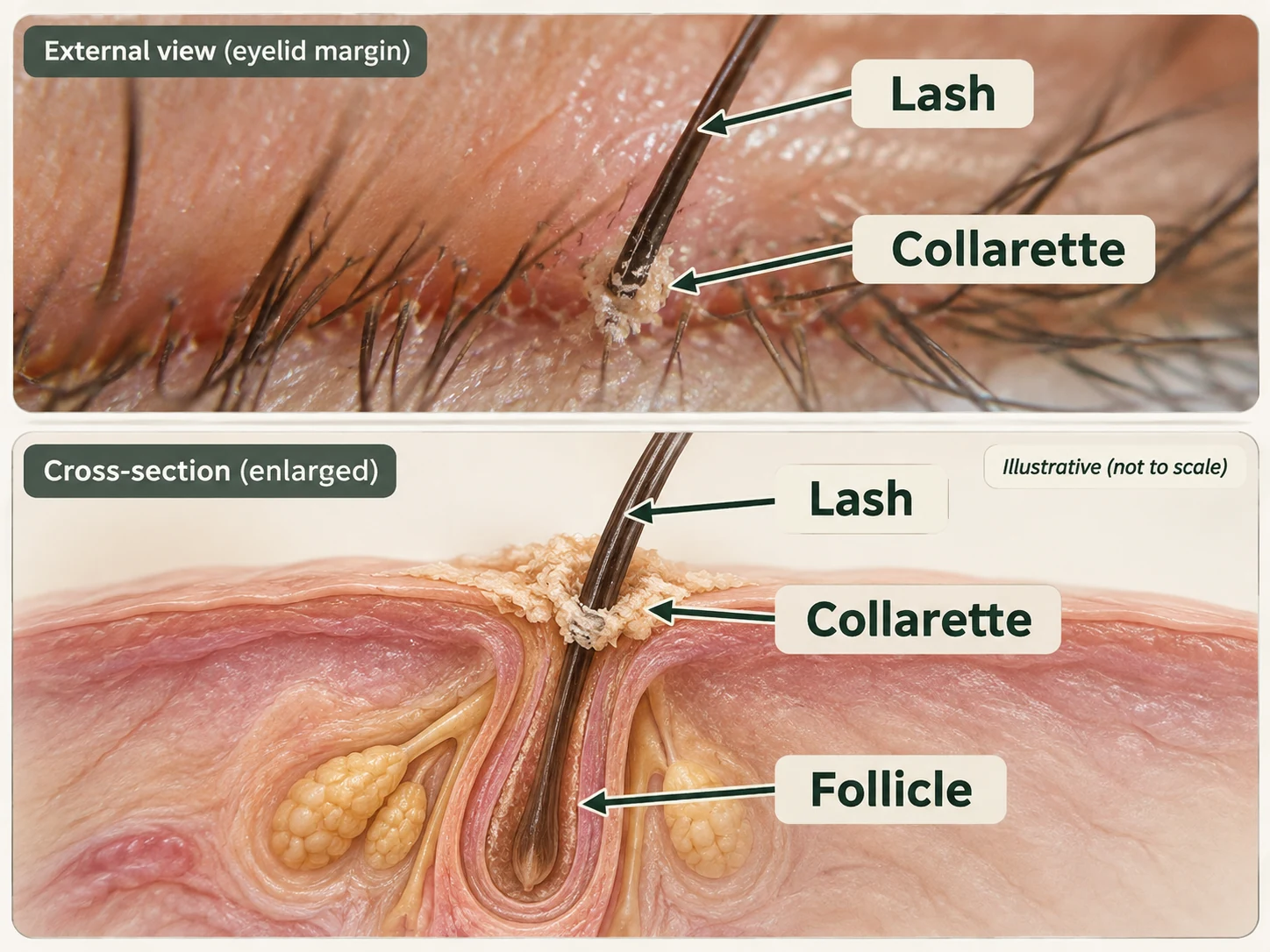
The mites also carry bacteria — specifically Bacillus oleronius and Staphylococcus — on and inside their bodies. These bacteria trigger an immune response in eyelid tissue that is clinically identical to allergic or inflammatory blepharitis. When mites die inside the follicle, their bodies rupture and release bacterial cargo directly into follicle tissue, triggering acute inflammatory episodes.
This is why the itch peaks at bedtime — the mites are emerging. This is why the morning crusting is always at its worst — the mites have been active all night. This is why anti-inflammatory drops and antihistamines provide only partial, temporary relief — they suppress the immune response, but cannot remove what is triggering it.
Your instincts were right. This is not simply "how your eyes are." There is a specific biological mechanism causing your specific pattern of symptoms — and there is a specific reason nothing you have tried has fully addressed it.
Why Every Standard Treatment Has Failed — Explained Mechanistically
Let me be direct about why each common approach falls short when Demodex is the real driver:
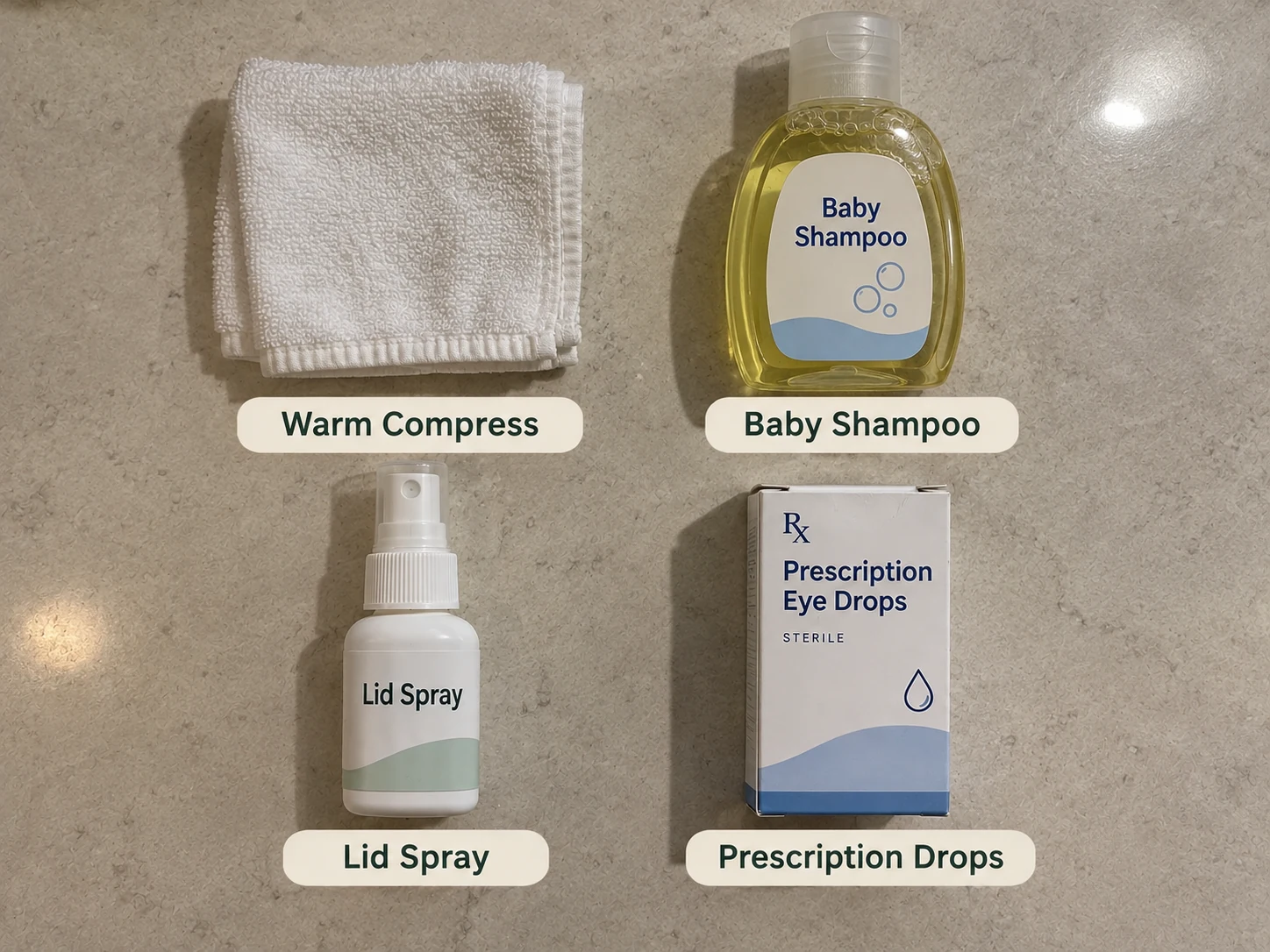
Warm compresses. Genuinely soothing. Effectively soften and loosen collarette debris at the lash base. Help maintain meibomian gland patency. But they cannot kill mites sheltering in the follicle, and they cannot stop mites from re-emerging and depositing new debris the following night. The debris returns in 48 to 72 hours because the colony producing it is undisturbed. Addresses inflammation. Does not address the mite.
Baby shampoo lid scrubs. The most universal recommendation in blepharitis care. Cleans the lash surface. Reduces surface bacterial load. But Demodex mites live inside the follicle — the scrub passes over them every morning without touching them. Addresses surface hygiene. Does not address the mite.
Hypochlorous acid (HOCl) sprays. A meaningful improvement — HOCl kills the bacteria the mites carry and reduces inflammatory load on the lid margin. But published research does not demonstrate that HOCl at ocular-safe concentrations eradicates Demodex mite populations at the follicle level. Addresses the bacterial cargo. Does not address the mite.
Prescription lotilaner (Xdemvy). The first FDA-approved treatment targeting Demodex specifically — and it works by paralyzing and killing the mite. The clinical barrier: at $1,800 to $2,000 for a standard 6-week course, with insurance coverage routinely denied as "not medically necessary," it is effectively inaccessible to the majority of the 25 million Americans who need it. And mite populations begin to repopulate following treatment cessation. Addresses the mite. Does not address affordability or sustainable prevention.
In each case, the approach fails not because the clinicians prescribing it lack expertise — but because the framing of blepharitis as primarily an inflammatory or hygiene problem has obscured the parasitic cause at its center.
What Eye Specialists Use When They Look Past the Guidelines
The compound that actually eliminates Demodex mites has been in the ophthalmology literature for more than 20 years.
Terpinen-4-ol — the primary active compound extracted from Australian Melaleuca alternifolia (tea tree) leaves — is directly lethal to Demodex mites at therapeutic concentrations. Researchers at the University of Sydney established this in the early 2000s. Multiple peer-reviewed studies have since confirmed it: terpinen-4-ol disrupts the mite's cellular membrane in a way that is acutely toxic to the parasite at concentrations that are safe for human tissue. It kills Demodex folliculorum and Demodex brevis at the follicle surface. It does not mask downstream symptoms — it eliminates the organism producing them.
The clinical formulation challenge has always been concentration. Pure tea tree oil causes severe ocular irritation that makes sustained use impossible. Products diluted enough for patient comfort often fail to deliver a therapeutic terpinen-4-ol concentration at the follicle. The gap between "too irritating to use" and "too dilute to work" has prevented a generation of patients from accessing what the science has known since 2003.
What was missing was precision: terpinen-4-ol calibrated at exactly the therapeutic concentration, combined with complementary botanicals that simultaneously address the downstream inflammatory cascade — so the patient is not trading one form of discomfort for another, and so the formula remains effective without compromising the sensitive eyelid tissue it needs to reach every day.
99% of Users Resolved Their Demodex Within 4–6 Weeks
After my experience with Susan, I began reviewing clinically formulated terpinen-4-ol products. Eyelure B7 Demodex Cleanser uses a 7-layer botanical formula: Australian tea tree oil paired with witch hazel, green tea extract, purslane, licorice root, chamomile, and olive oil extract — each playing a specific role.

The tea tree oil delivers terpinen-4-ol at therapeutic concentration, targeting mites at the follicle surface during their nocturnal emergence. Witch hazel and green tea extract regulate the sebum production that sustains the mite colony. Chamomile and licorice root address the inflammatory cascade caused by mite waste and bacterial toxins. Purslane and olive oil extract repair the skin barrier that years of infestation have damaged.
99% of users reported resolution of their Demodex blepharitis within 4–6 weeks of consistent twice-daily use. 99% reported no stinging after application. 98% noticed measurable improvement in skin hydration alongside the eyelid improvement.
In my own practice, Susan — who had failed eight months of my best treatment — was essentially symptom-free by week five. She put her contacts back in for the first time in almost two years. She put on mascara the morning of her follow-up appointment. She looked across the exam table and said: "I thought this was just how my eyes would be forever."
She had been misdiagnosed for three years. The correct treatment compound had been in the scientific literature for 20 of those years. The gap between the two was simply formulation and access.
Four Years of Avoidable Suffering. Because We Were Treating the Wrong Target.
The research on Demodex prevalence is unambiguous: 84% of adults over 60 carry Demodex mites, and prevalence increases directly with age. Perimenopause and menopause alter sebum composition in the meibomian glands — creating conditions measurably more favorable to mite overgrowth. Women in their late forties and fifties are disproportionately affected, and according to published studies, disproportionately underdiagnosed.
Untreated, Demodex infestations worsen over time. Mites block meibomian glands. Blocked glands lose secretory function in a process that is not fully reversible. Every year of unaddressed infestation represents potential permanent gland damage that no future treatment can fully repair.
The average patient suffers 4.3 years before receiving a correct diagnosis. That is 4.3 years of avoidable progression. 4.3 years of management rituals that treated the downstream effects of an untreated parasite. 4.3 years of being told: "This is just how your eyes are."
This did not need to happen. The compound that addresses the real mechanism was available. The science was not hidden. The gap was that no one had formulated it with the precision and accessibility that patients needed — until now.
Eye Care Professionals Are Quietly Switching Patients to This
Word spreads quickly in clinical communities. Eye care specialists attending ocular surface disease conferences are increasingly aware of the Demodex prevalence data and are actively recommending properly formulated terpinen-4-ol cleansers to their patients in place of — or alongside — traditional lid hygiene protocols.
Demand is growing. Eyelure B7 is now available direct to patients — a precisely formulated 50ml botanical foam cleanser at $28 with Subscribe & Save (15% savings) or $34 as a one-time purchase. That is less than 2% of the cost of the FDA-approved prescription alternative.
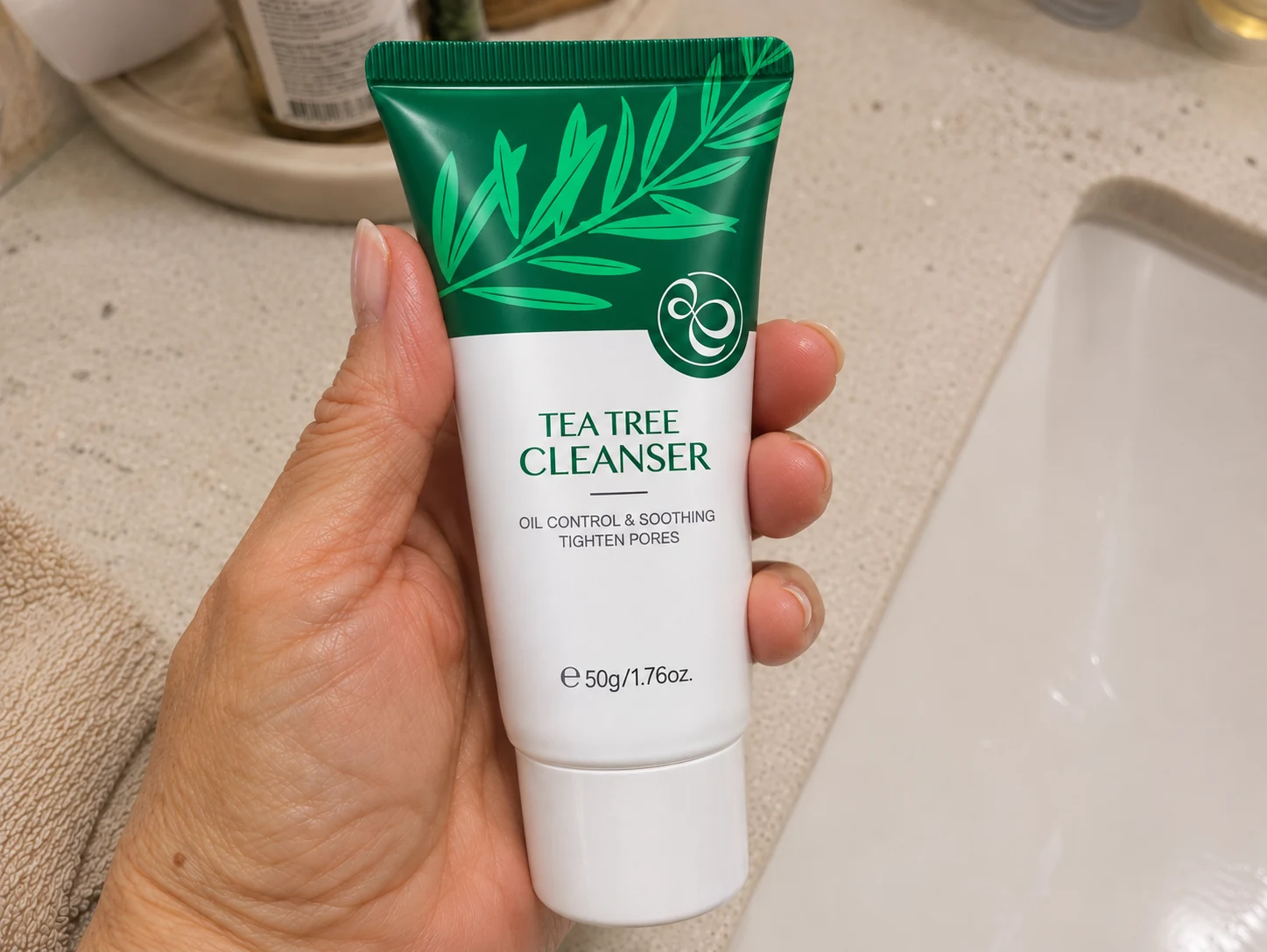
If you have been managing blepharitis or "dry eye" for more than three months without full resolution, I encourage you to consider that the real cause may never have been targeted.
Use it twice daily for 4 to 6 weeks. If you do not see meaningful change, their return policy protects your purchase. If you do — and clinical data says you should — you may finally understand what it feels like to wake up and open your eyes without bracing for what comes next.
What Patients Are Saying
“I have been struggling with lash mites for 2 years. I tried everything from over-the-counter eyedrops to wipes. Only this cleanser has worked for me so far. The difference was noticeable within two weeks.”
— Linda H. | 2-year Demodex sufferer
“My insurance denied coverage for Xdemvy even though I have had Demodex for over a year. Eyelure fixed what would have cost me over $2,000 — within 5 weeks, for just $30. I cannot believe how long I suffered not knowing this existed.”
— Laura S. | Denied Xdemvy coverage
“I have tried so many wipes from different brands but they either burn or dry out my skin. I did not feel any of that with this cleanser. My eyes feel clean in a way they have not in years.”
— Michelle C. | Sensitive skin with eczema
References
- 1.Dohil, M. A. (2013). Natural ingredients in atopic dermatitis and other inflammatory skin disease. Journal of Drugs in Dermatology, 12(9 Suppl.), s128–s132. pubmed.ncbi.nlm.nih.gov
- 2.Mahmood, T., Akhtar, N., & Moldovan, C. (2013). A comparison of the effects of topical green tea and lotus on facial sebum control in healthy humans. Hippokratia, 17(1), 64–67. pubmed.ncbi.nlm.nih.gov
- 3.Savla, K., Le, J. T., & Pucker, A. D. (2020). Tea tree oil for Demodex blepharitis. Cochrane Database of Systematic Reviews, 2020(6), Article CD013333. Cochrane Library
- 4.Tighe, S., Gao, Y.-Y., & Tseng, S. C. G. (2013). Terpinen-4-ol is the most active ingredient of tea tree oil to kill Demodex mites. Translational Vision Science & Technology, 2(7), Article 2. pubmed.ncbi.nlm.nih.gov
- 5.Trattler, W., Karpecki, P., Rapoport, Y., Sadri, E., Schachter, S., Whitley, W. O., & Yeu, E. (2022). The prevalence of Demodex blepharitis in US eye care clinic patients as determined by collarettes: A pathognomonic sign. Clinical Ophthalmology, 16, 1153–1164. doi.org
About the author

Jennifer Walsh, OD
Optometrist | Dry Eye and Ocular Surface Disease
Dr. Jennifer Walsh is an optometrist with 18 years of experience caring for patients with dry eye and chronic eyelid inflammation. For Ophthalmo MD, she writes about the questions patients bring to the exam room, from why their eyes feel gritty to what an eye doctor looks for when itching and crusting keep coming back.
Disclaimer: These statements have not been evaluated by the Food and Drug Administration. This product is not intended to diagnose, treat, cure, or prevent any disease. Results may vary. Individual experiences described may not reflect typical results. The expert opinion expressed in this advertorial represents the views of a contributing practitioner and does not constitute medical advice. Consult your eye care provider before beginning any new eyelid hygiene regimen, particularly if you have been diagnosed with glaucoma, an autoimmune condition, or other ocular surface disease.